Do not make every part of a Honesdale yard bare. Mulch manageable lawn leaves, move clean excess to beds or a leaf pile, keep debris out of streets and drains, and separate invasive or diseased plants. Borough curbside rules and county recycling acceptance are separate checks. [1] [2] [3]
Start with the parts of the yard that cannot wait
A responsible Honesdale fall yard cleanup starts with access and water flow, not a bare yard. Clear walks, steps, driveways, entrances, lawn areas buried by leaves, and space around curb inlets. Then sort material into clean leaves, ordinary yard debris, and invasive or diseased plants that must stay out of compost. [3] [4] [5]
Work from the house and hardscape outward. This keeps loose leaves off cleared paths and reveals wet spots or drainage issues before freeze-thaw weather. Preserve what offers winter habitat, remove what creates a turf, safety, disease, or drainage problem, and postpone pruning that could prompt late growth. [4] [6]
Use a fall schedule rather than one giant cleanup
In early fall, make a first mow-and-mulch pass, check downspouts and curb lines, and pull weeds before they set seed. After the first frost, pull annuals and remove diseased vegetable-garden debris. Leave sound seedheads, ornamental grasses, and selected perennial stems where they do not block access; they can support birds and beneficial insects. [4]
During main leaf drop, take lighter passes rather than waiting for one deep, wet blanket. Make a final pass after most leaves have fallen: clear covered turf, clear loose debris from the curb inlet approach at ground level, store equipment, and stage only approved material for collection. [3] [4]
Mow and mulch leaves where the lawn can handle them
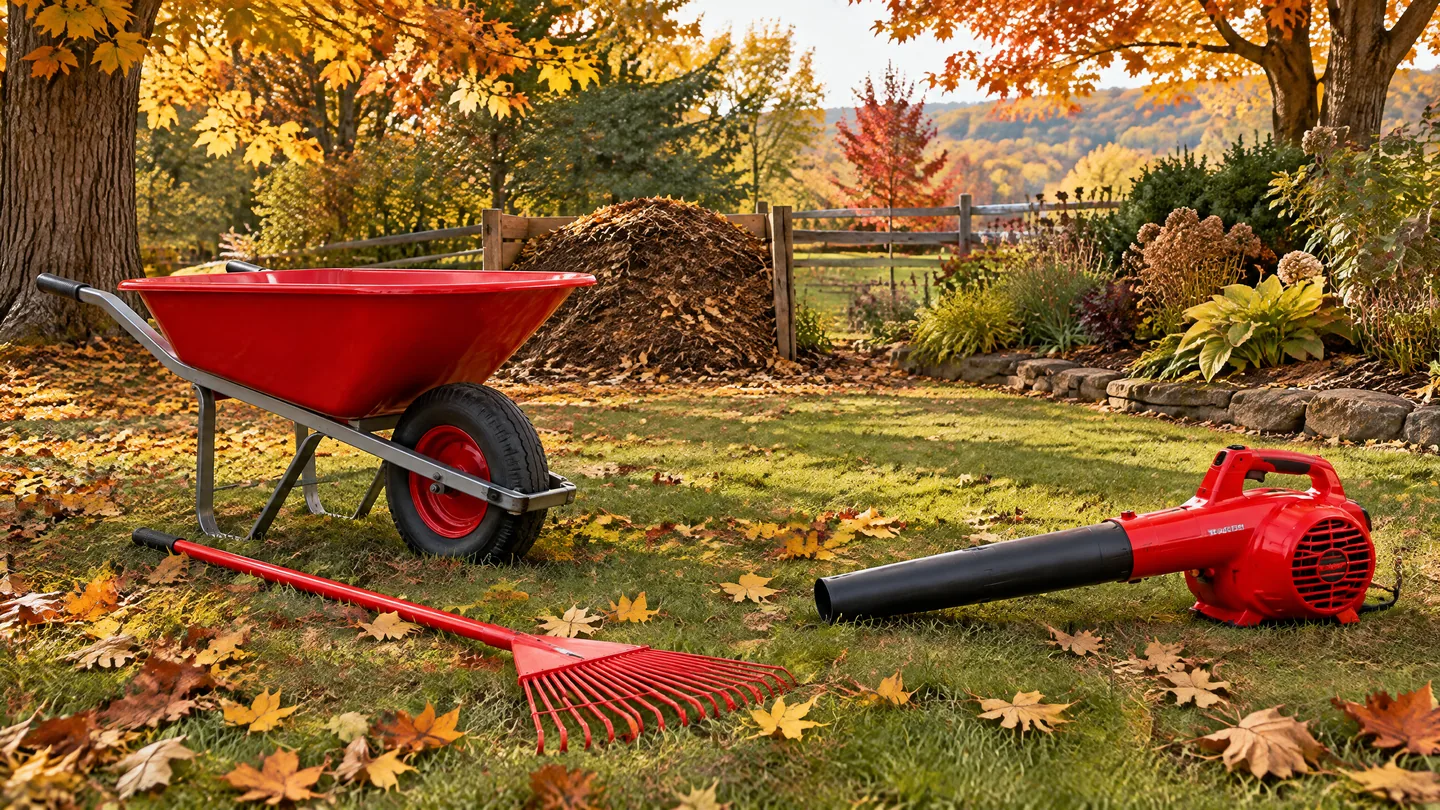
For a manageable layer of dry leaves, mow them into small pieces rather than bagging everything. Penn State Extension recommends a few mower passes; the pieces decompose and return nitrogen to soil. DEP also identifies fall mulch-mowing as a way to strengthen lawn and soil and reduce runoff. [3] [4]
Rake or blow away a heavy, wet, or matted layer that hides the grass. It can smother turf and contribute to snow mold. Move clean excess leaves to a bed, contained leaf-mold pile, or verified collection stream, never into the street. [3] [4]
Compost clean leaves and keep a deliberate habitat zone
Keep clean, noninvasive, nondiseased leaves on site when practical. Add them gradually to compost or use them as loose bed mulch, away from drains and tree trunks. Leaves in beds help insulate roots, while composting recycles nutrients. [4]
Reserve one low-traffic habitat zone beneath shrubs, in a bed, or in a contained corner. Leave some whole leaves and sound perennial stems there over winter. Do not add diseased plants, invasive plants, aggressive weed seedheads, street sweepings, or a deep extra layer in existing woods. [4] [5]
Keep leaves out of streets, gutters, and storm drains
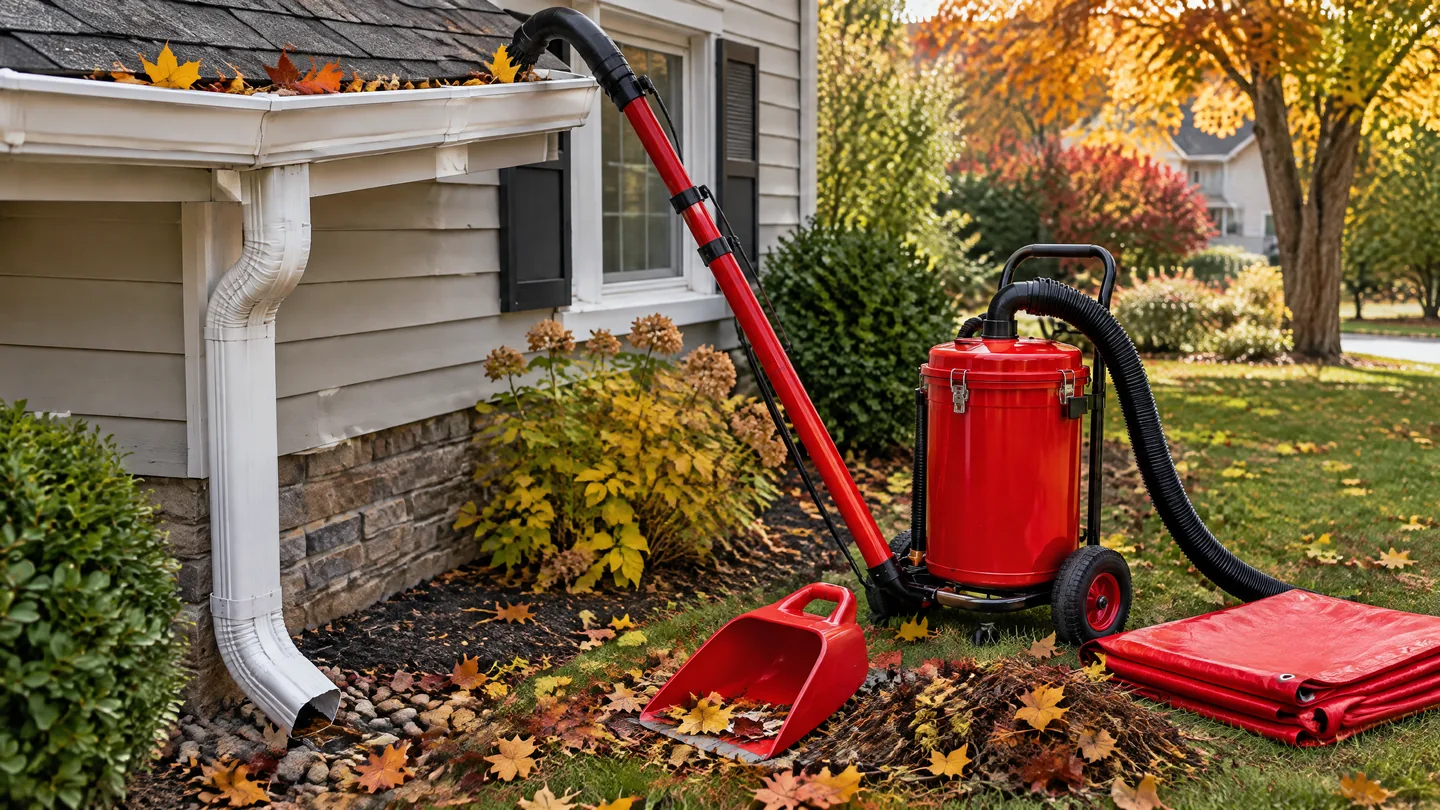
Never rake, sweep, or blow leaves and grass clippings into a street, gutter, ditch, or storm drain. DEP advises composting or mulching them instead. Keep bags, bins, and temporary leaf piles back from curb inlets, and sweep loose debris away from the opening from sidewalk or curb level. [3]
Do not lift a grate, enter a catch basin, reach into a drain, or force debris through it with water. Report persistent blockage, ponding, or work with traffic exposure to the appropriate public works contact. [3]
Separate invasive plants, seedheads, and diseased debris
Keep pulled invasive plants, seedheads, berries, roots, rhizomes, bulbs, and fragments out of compost. These materials can survive composting and spread when the compost is used. Seal them in heavy-duty plastic, double-bag when practical, and only use a disposal route that prevents spread. Penn State Extension describes solarizing suitable sealed bags in direct sunlight for several weeks before regular trash. [5]
Bag diseased foliage instead of mulching or composting it. Clean soil and residue from hand tools, mower decks, and footwear before moving to healthy beds. If you cannot identify the plant or its proper local disposal route, isolate it first. [4] [5]
Verify Honesdale collection separately from county recycling
Honesdale Borough publishes a route-based yard-debris schedule and rules for its residents. Its 2026 guidance allows leaves in paper bags or labeled rigid containers no larger than 32 gallons and under 30 pounds. It prohibits plastic bags and gives separate branch and excluded-material limits. The published schedule runs through the last week of October, but routes, dates, holidays, and rules can change; confirm the live Borough page and your address before setout. [1]
Do not assume Borough curbside rules mean the Wayne County Recycling Center accepts the same material. Wayne County maintains separate Recycling and Accepted Materials information. Before hauling leaves, brush, invasive bags, or mixed debris, verify current acceptance, preparation, hours, and charges with the County. This matters especially outside Borough limits. [2]
Defer heavy pruning by species
In fall, remove only clearly dead, damaged, or diseased small material that is safely reachable from the ground. Do not indiscriminately hard-prune. Penn State Extension cautions that late-summer and fall pruning can stimulate growth vulnerable to winter injury. [6]
Prune spring-flowering shrubs such as lilac, azalea, forsythia, rhododendron, and weigela after flowering because they set buds on old wood. Summer-flowering shrubs that bloom on new wood are generally pruned in late winter or early spring. Save major height reduction, structural tree work, and unknown species for the right season and qualified professional. [6]
Homeowner checklist and a sensible professional boundary
Homeowners can usually manage ground-level sorting, mowing, bed cleanup, and properly prepared setout. Use gloves, sturdy footwear, eye protection, and hearing protection around power equipment. Stop for overhead limbs, ladders, electric service, unknown plants, traffic exposure, steep ground, heavy lifting, spring-loaded equipment, or an obstructed drain; these need appropriate professional handling.
P&M Property Services LLC works from Scranton and typically serves properties within roughly 50 miles. Specific Honesdale address coverage must be confirmed before scheduling. Call +1 570-780-8074 to discuss a ground-level cleanup plan or work better left to a professional.
- Check the live Honesdale Borough route and setout rules if the property is within Borough limits. [1]
- Mow thin, dry lawn leaves; remove thick or matted layers from turf. [3] [4]
- Reserve a clean bed or low-traffic corner for some leaves and sound stems. [4]
- Keep all yard debris out of streets, gutters, and drains. [3]
- Bag invasive or diseased plant material; never add it to home compost. [5]
- Delay heavy pruning until the species and correct pruning season are known. [6]
STRAIGHT ANSWERS
Common questions
Does Honesdale Borough pick up fall leaves?
Honesdale Borough publishes a route-based yard-debris program through the last week of October in its 2026 schedule. It lists paper bags or labeled rigid containers within stated limits and does not allow plastic bags. Confirm the live Borough page and your route before each setout because rules and dates can change. [1]
Should I mulch every leaf into my lawn?
No. Mulch manageable dry leaves with repeated mower passes, but remove a thick, wet, or matted layer that could smother turf or contribute to snow mold. Use a suitable bed, leaf pile, compost system, or verified collection route instead of the street or drain. [3] [4]
Can invasive plants go in my compost or yard-waste pile?
No. Do not home-compost invasive plants or their seeds, roots, rhizomes, bulbs, or resprouting fragments. Seal them in heavy-duty bags, double-bag when practical, and confirm a disposal route before adding material to any collection or recycling load. [5] [2]
CHECK THE ORIGINAL GUIDANCE
Sources & local resources
Municipal rules, collection programs, and product instructions can change. Confirm current details before the work begins.
- Yard Debris CollectionHonesdale Borough
- Accepted MaterialsWayne County, Pennsylvania
- Be Stormwater SmartPennsylvania Department of Environmental Protection
- Fall Garden TasksPenn State Extension
- How To Properly Dispose of Invasive Plant SpeciesPenn State Extension
- How and When to Prune Flowering ShrubsPenn State Extension
This guide explains preparation and general maintenance. It is not an engineering assessment, permit determination, or substitute for the equipment manufacturer’s instructions. P&M’s ability to help with a specific task is confirmed during the estimate.