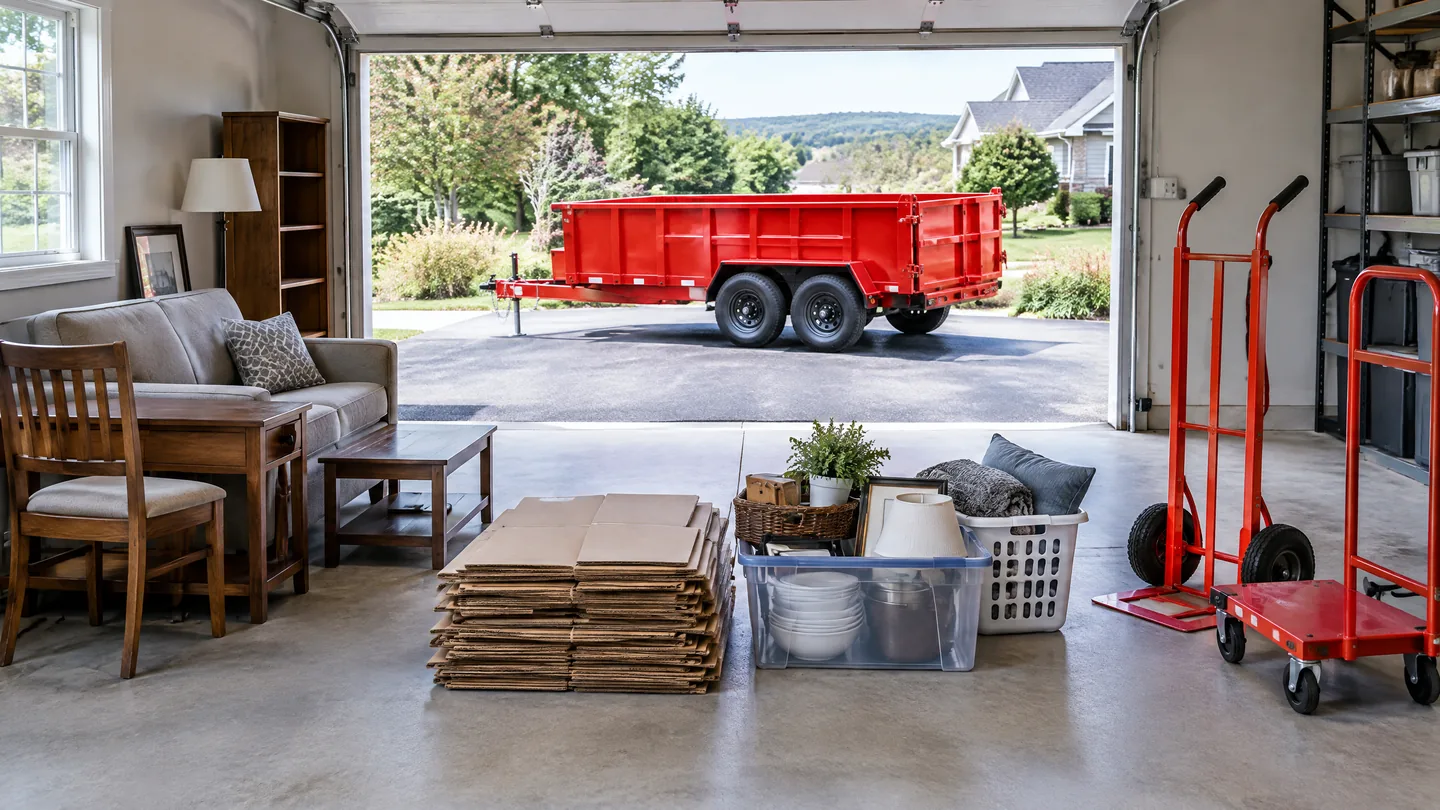
Inventory the space and separate donation, recycling or special disposal, city-eligible bulky items and ordinary discard. Wilkes-Barre's special collections are limited curbside resident programs, not a general cleanout service. Keep hazardous materials, electronics, batteries and refrigerant appliances out of the ordinary pile. [1] [4] [6]
Start with an inventory and access photos
Before moving anything, list major pieces, bags, boxes, electronics, appliances and chemicals. Take wide photos of the room, exit route, driveway and curb area, plus close photos of unusual items. Keep documents, account numbers and family photos out of the images.
Note narrow stairs, low ceilings, a wet floor, a locked gate, animals and any item too heavy for a safe carry. Move keep items and records away from the removal path. Keep electrical panels, furnaces, water heaters and exits clear. The inventory helps a donation site, recycler, city program or hauler answer the right question.
- Photograph the exit route, curb space and every unusually large or regulated item.
- Estimate bags, boxes and major pieces instead of describing the room as one mixed pile.
- Label keep items and place them outside the work path.
- Keep items for a city program separate from material intended for a private hauler.
Sort into four clear streams
Make four staging areas: keep, donate, recycle or special disposal, and ordinary discard. Donate only clean, complete and safe items after confirmation. Bag light loose material, flatten cardboard and do not hide special items in boxes.
Put electronics in a separate recycling zone. Pennsylvania says e-waste can contain lead, cadmium, mercury, arsenic and other toxic components. The Covered Device Recycling Act requires manufacturers to provide recycling programs for televisions, desktop and laptop computers, monitors and peripherals sold to consumers in Pennsylvania. [5]
Keep paint, pesticides, pool chemicals, drain cleaners, batteries and motor oil in labeled containers. DEP identifies them as household hazardous waste and says not to mix leftover products. Check labels and use a current accepted program; DEP also points residents to Call2Recycle for batteries and cell phones. [4]
Separate city curbside collection from private hauling
Wilkes-Barre special collections are limited, item-specific curbside programs, not general garage or basement cleanout service. The city notice reviewed October 13, 2026 lists separate appliance and couch, chair and mattress collections, each with fees, a four-item household limit, neighborhood dates and item restrictions. Appliances exclude furniture, mattresses, electronics, tires, car batteries, recyclables, residential garbage and yard waste. The furniture event also excludes appliances, electronics, tires, metal items, car batteries, recyclables, regular garbage and yard waste. Fees and dates can change, so check the live city notice. [1]
City crews will not remove items from homes or backyards. For the posted 2026 programs, items had to be curbside by 6 a.m. Monday and not more than 24 hours early; timing could change for volume, staffing or weather. [1] A private hauler may remove disclosed, nonhazardous items from inside under its own disposal plan. Never assume its load is eligible for a municipal, county or retailer resident drop-off.
Use current Luzerne County procedures for hazardous waste and e-waste
Luzerne County's household-hazardous-waste page directs residents to a Pennsylvania leftover-paint publication and state recycling resources; it does not show a standing county drop-off schedule in the material reviewed. [2] Identify the product, keep it sealed and labeled, then check the current county or DEP option before transport. If no collection is available, DEP describes a narrow regular-trash option only when labels are followed, no free liquid remains, packaging prevents leaks and quantities stay small. Treat it as a last resort. [4]
For e-waste, verify the organizer, date, items, condition and residency rule before loading. A Luzerne County listing for a Wilkes-Barre City residential electronics collection on October 5, 2026 required valid Pennsylvania identification, proof of residency, intact TVs and monitors, sealed car batteries and drained lawnmower fluids. That past event shows the procedure to verify, not a future offer. [3] Resident eligibility never transfers to a private contractor load.
Keep paint, batteries and refrigerant appliances out of the junk pile
Do not mix paint or chemicals, puncture a battery or put either in a mixed pile. For an unknown, leaking or unlabeled container, stop and get disposal direction. Store it upright, away from drains, flames and children. [4]
Do not cut refrigerant lines or empty a refrigerator, freezer, window air conditioner or dehumidifier. EPA says these appliances may contain refrigerants and hazardous components, and a municipality may require professional refrigerant recovery before acceptance. [6] The reviewed city program required refrigerator doors removed and excluded plastic drawers; recheck current conditions. [1]
Use DIY for sorting; get help for risk or access
DIY is sensible for sorting light, dry, nonhazardous items and taking an eligible personal residential load to a confirmed program. Wear closed-toe shoes and gloves. Stop for unstable stacks, sharp debris, exposed electrical components or uncertain chemicals.
Use appropriate professional handling for heavy or elevated carries, large appliances, suspected lead-containing material, spring-loaded doors or equipment, and items behind fixed equipment. Do not dismantle garage-door springs, live electrical equipment or refrigerated appliances. P&M Property Services LLC provides junk removal from Scranton, typically approximately 50 miles; exact service coverage must be checked at the address. Share the inventory and access photos, disclose special items and call +1 570-780-8074 to discuss a Wilkes-Barre cleanout.
- Confirm each city, county, retailer or recycler rule before loading material.
- Reserve a clear path from the work area to the exit.
- Keep hazardous, electronic and refrigerant-containing items out of ordinary discard.
- Ask a private provider how disclosed special items will be handled; do not use a resident program as its disposal destination.
Mistakes to avoid
Do not put an entire basement at the curb and hope it counts as bulk pickup. Do not rely on an old event flyer, set material out early or expect a city crew to return for a missed placement. [1] Do not mix reusable goods with wet or contaminated items, forget data on old devices, or bury regulated items in a bag. A simple inventory, separate staging zones and current confirmation are safer than a rushed mixed pile.
STRAIGHT ANSWERS
Common questions
Does Wilkes-Barre have bulk pickup for a whole garage or basement cleanout?
Not as a general inside-removal service. The city notice shows separate, item-specific special collections with limits and exclusions. Check the current city notice before relying on one. [1]
Can paint, batteries or electronics go into the ordinary cleanout pile?
No. Separate them. DEP identifies paint and batteries among household hazardous wastes, and e-waste needs proper recycling because it can contain harmful components. [4] [5]
What should I do with an old refrigerator or window air conditioner?
Check the current city appliance program or another approved option. Do not cut lines or attempt refrigerant recovery; EPA says professional removal may be needed before municipal acceptance. [6]
CHECK THE ORIGINAL GUIDANCE
Sources & local resources
Municipal rules, collection programs, and product instructions can change. Confirm current details before the work begins.
- Special CollectionsCity of Wilkes-Barre
- Household Hazardous Waste ItemsLuzerne County
- Wilkes Barre City Residential Electronics Recycling CollectionLuzerne County
- Household Hazardous WastePennsylvania Department of Environmental Protection
- ElectronicsPennsylvania Department of Environmental Protection
- Appliance DisposalU.S. Environmental Protection Agency
This guide explains preparation and general maintenance. It is not an engineering assessment, permit determination, or substitute for the equipment manufacturer’s instructions. P&M’s ability to help with a specific task is confirmed during the estimate.